
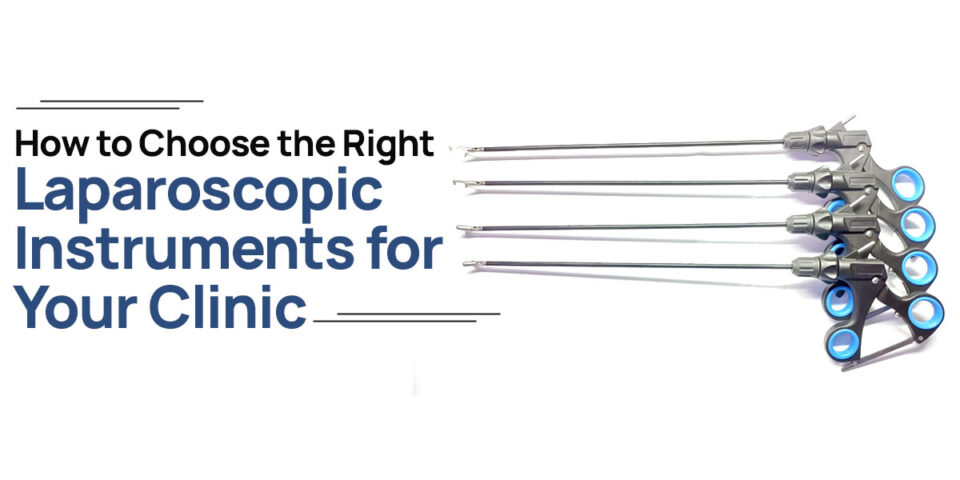
How to Choose the Right Laparoscopic Instruments for Your Clinic
Minimally invasive surgery has revolutionised the field of healthcare with increased safety, shorter healing times, and fewer hospitalisations. However, the effectiveness of such surgeries is largely determined by the selection of appropriate Laparoscopic Instruments. For most clinics, the challenge isn’t about being unaware of available options, but about choosing instruments that truly deliver accuracy, longevity, and cost-effectiveness. This guide gives you a systematic method of assisting your clinic to make effective decisions.
Understanding the Role of Laparoscopic Surgical Instruments
Modern minimally invasive procedures are based on trusted, well-constructed Laparoscopic Surgical Instruments. In comparison to open surgeries, laparoscopy necessitates the use of instruments that are capable of working through small cuts and yet remain visible and accurate. These tools enable surgical practitioners to dissect, hold, cut and suture without causing much disruption to adjacent tissues.
When selected appropriately, they aid in minimising trauma to the patient, loss of blood, and enhance overall procedures. On the other hand, instruments that are of poor quality or do not match can lead to increased risks for complications, challenges with the precision of the surgery, and increased long-term costs for a clinic.
Building a Foundation: Assessing Your Clinic’s Needs
Each clinic is a separate one and so are its surgical needs. The initial thing to consider when choosing the instrument is the specialities you serve. The general surgical hospital can emphasise graspers, dissectors, and trocars, whereas a gynaecology-oriented clinic might need unique scopes and uterine manipulators.
It also depends on volume. High turnover environments would have to invest in long-lasting Clinic Instruments that can withstand the sterilisation cycles without losing effectiveness. Moreover, for clinics that are planning to expand into new specialities, it is worth considering scalable instrument sets that adapt to future needs as opposed to short-term solutions.
Exploring the Different Types of Laparoscopic Instruments
To make smart choices, it is imperative to understand the Types of Laparoscopic Instruments available:
- Access Devices: Trocars and cannulas provide access into the abdominal cavity. Size, design, and seal system selection can affect safety and comfort.
- Visualization Tools: Laparoscopes, cameras, and light sources allow clear vision in the surgical area. High-definition scopes help increase precision and shorten operative time.
- Tools and Equipment Used in Dissection: Babcock forceps, Maryland dissectors, and atraumatic graspers are invaluable for tissue handling.
- Suturing and Closure Tools: Needle holders, clip appliers, and fascial closure devices provide safe and effective wound management.
- Energy Devices: Electrocautery and ultrasonic instruments are used for vessel sealing and cutting.
A moderated combination of these will ensure that your operating group is oriented to normal and complicated cases.
Key Criteria for Choosing the Best Laparoscopic Instruments
To choose the Best Laparoscopic Instruments is not just about making a selection off the paper. These are key points to consider:
- Material and Quality: High-quality stainless steel instruments are incredibly durable and will not rust, and they stay sharp.
- Ergonomics: Surgeons make fine movements for hours. Comfortable handles reduce hand fatigue and provide better control.
- Versatility vs. Specialization: While general tools can be cost-effective, specialised instruments may enhance the results of complicated surgery.
- Maintenance and Serviceability: Instruments shall be easy to clean, reprocess and repair if necessary.
The balance of these considerations would help clinics to steer clear of the obvious trap of selecting instruments out of price considerations.
Balancing Cost and Long-Term Value
The urge to save the initial costs by using less expensive instruments is too good to resist. It usually, however, increases replacement costs and repair costs in the long-term. Clinics should not only look at purchase price but also at sterilization, repair and lifecycle cost. More expensive instruments in the short term are better than their cheaper counterparts because they are more efficient and cause fewer problems in the long term.
Ensuring Safety and Compliance
Every purchase decision must be based on patient safety. Laparoscopic tools need to be internationally qualified and certified. Electrosurgical instruments require regular insulation testing, magnified inspection, and functional inspection.
Staff training is also important. Even the best tools can be useless if not used correctly. Clinics are advised to invest in safe handling, cleaning and effective storage training programs.
Collaborating with the Right Suppliers
The choice of instruments does not only concern products, but also suppliers. Relying on a partner is equal to timely deliveries, guarantees, and continued services. Clinics should consider their reputation in the market, after-sales service, and turnaround times for repairs.
In areas with various healthcare requirements, it is possible to get quality instruments through reliable Surgical Suppliers in Bangalore, which will provide clinics with good services. Working with these suppliers may simplify the procurement process and ensure its reliability.
Integrating Instruments into Clinical Workflow
Even the most sophisticated tools lose their effectiveness without the effective integration of the workflow. Surgical trays should be standardised in clinics in cases where common procedures occur, and further confusion during surgery should be minimised. The instruments are maintained in sterile condition and can be safely reused with the assistance of the appropriate reprocessing procedures in line with the international standards.
Regular audits enable clinics to plan for the timely replacement of instruments nearing the end of their lifespan instead of risking unexpected failures mid-procedure.
The Role of Technology in Modern Instruments
With the development of technology, laparoscopic surgery has been greatly improved. From articulating laparoscopes that provide better reach to energy devices that offer safer vessel sealing, innovations make surgeries quicker and more precise. Moreover, the modern design of laparoscopic instruments is also influenced by the recent developments in robotics and the use of artificial intelligence-supported platforms.
The clinics embracing the technologies will be on the forefront of surgery quality offering better outcomes and attracting more customers.
Procurement Strategy Construction
The planned procurement plan will make sure that clinics make intelligent, future-oriented investments. This involves:
- Price and quality of different vendors.
- Requesting to taste it and conduct practical analysis.
- Consulting with the surgeons and staff before finalising.
Strategic buyers are also concerned with established Medical tools for Surgery that ought to meet current and future demands. This strategy reduces wasteful spending and ensures efficiency in the long term.
Conclusion
The selection of laparoscopic instruments is not a matter of checking boxes-it’s a strategic decision that influences patient outcomes, surgeon proficiency, and clinic reputation. By assessing surgical requirements, comparing Types of Laparoscopic Instruments, prioritising ergonomics and safety, and collaborating with trusted suppliers, clinics can confidently create a foundation for successful minimally invasive care.
When your clinic is seeking trusted solutions, consider RL Hansraj Company, the name to rely upon to find the highest quality and efficiency of surgical equipment.