
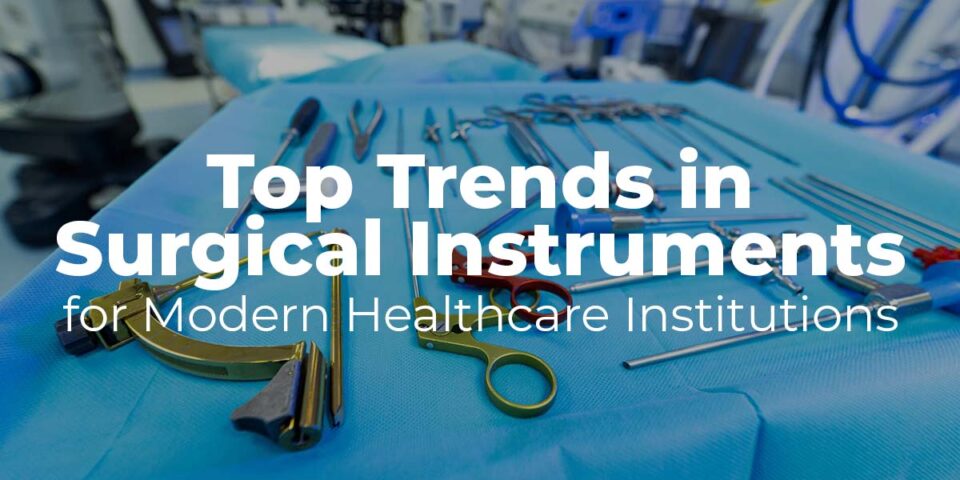
Top Trends in Surgical Instruments for Modern Healthcare Institutions
In healthcare institutions, the outcome of a surgery depends not only on a surgeon’s skill but also on the precision of the medical tools for surgery used in the operating room. Over time, these instruments have moved far beyond hand-crafted steel. They are now built through detailed engineering that focuses on control, stability, and patient safety. Hospitals increasingly ask for instruments that connect with new digital systems, simplify minimally invasive work, and meet global sterilization norms. This demand has reshaped every stage of design and production. For R L Hansraj & Co., such changes reflect the same values the company has followed for decades, making instruments that perform reliably under real surgical conditions.
Shift Toward Minimally Invasive Instruments
In recent years, surgery rooms have changed more than most people notice. The instruments have become smaller, lighter, and far more responsive to a surgeon’s hand. Healthcare institutions now rely on modern surgical instruments designed to reach the same result through minimal cuts. Procedures that once required large openings laparoscopy, endoscopy, and orthopaedic repair, are now done using modern surgery tools built for quiet precision. Handles feel steadier, joints move smoothly, and the overall weight is reduced to help during long operations. Some setups even include robotic surgical instruments, allowing surgeons to guide movement from a console with greater control than before. These improvements make a clear difference: patients heal faster, infection chances fall, and the operating team works with less strain. The push toward smaller, cleaner access points is not a passing trend; it has become the working standard across most surgical disciplines today.
Integration of Smart & Digital Features
Instruments used in surgery are no longer limited to simple mechanical function. Many modern surgery tools now have small sensors or chips fitted into their handles, recording how and when each tool is used. This information helps healthcare institutions track sterilization, usage cycles, and replacements without depending fully on paperwork. In high-end setups, robotic surgical instruments collect data on torque, grip, or temperature, which the surgeon can review instantly while operating. These details may seem minor, but they help reduce errors and improve consistency. What was once seen only in advanced research centres is now appearing in ordinary hospitals. The latest advanced surgical instruments are therefore built not just for precision in the hand but for accountability across the entire surgical process.
Rise of Single-Use and Hybrid Instruments
Keeping surgical tools sterile has never been simple, even with the best facilities. In many healthcare institutions, the focus has shifted toward modern surgical instruments designed for one-time use. They go straight from a sealed pack to the operating table, then out for safe disposal. This avoids long cleaning cycles and removes doubts about sterilization quality. Some setups now use hybrid systems metal parts that stay, and plastic tips that change with each case. It saves both time and cost in busy theatres. The same approach is finding its place alongside modern surgery tools and even robotic surgical instruments, where hygiene rules are strict and downtime is expensive. The aim is the same everywhere: keep infection risk as close to zero as possible.
Advanced Materials and Surface Treatments
The materials used in surgical tools are no longer limited to traditional steel. Titanium blends, reinforced polymers, and newer alloys now form the base of many modern surgery tools. They hold strength without adding weight, which matters during long operations. Surfaces are treated differently, too; some are ceramic-coated, others get a plasma finish to stop stains and wear from setting in. The smallest detail, even how the edge reacts to sterilization, decides how long a tool lasts. In precision systems like robotic surgical instruments, finish quality affects every movement. That is why most makers of advanced surgical instruments now invest heavily in better metal treatment, marking, and polishing methods instead of relying only on stronger raw materials.
Sustainability and Sterilization Efficiency
Healthcare institutions everywhere are rethinking how to keep instruments sterile while cutting down on waste. The newer lines of modern surgical instruments are being built to handle shorter washing cycles and low-temperature sterilization without losing finish or sharpness. Some systems now use redesigned trays that let water drain faster, helping the load dry quickly and saving both time and power. Many facilities have linked their cleaning and reprocessing units with tracking software to record every cycle automatically. These changes look small but make a visible difference in daily work. For manufacturers of modern surgery tools, sustainability has become part of design, reducing material use, extending service life, and supporting hospitals that want cleaner, more efficient sterilization routines.
Conclusion
Surgical instruments are changing quietly but steadily. The new ones are lighter, simpler to maintain, and made for exact control during long procedures. Healthcare institutions want tools that last through repeated use and still meet sterilization checks without fail. Some are adding digital support where it makes sense, not as a show of technology but to make daily work easier. That is the direction the field is taking. Among surgical instruments manufacturers in Chennai, R L Hansraj & Co. has stayed close to the basics, sound material, careful finish, and designs tested in real operating rooms. R L Hansraj & Co. keeps its design effort centred on how a tool performs during surgery, not on how modern it appears in promotion.