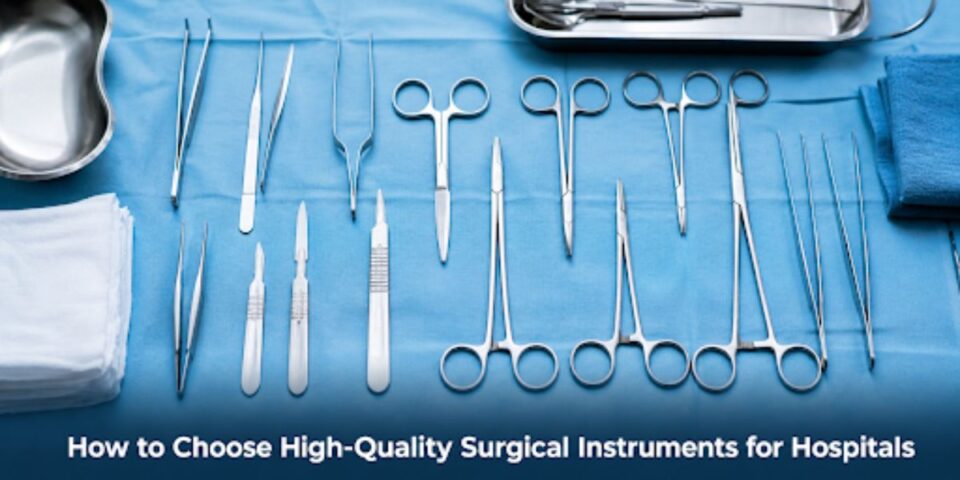
The precision of a surgical procedure often depends on the literal edge of a blade or the grip of a forceps. When procurement officers or surgeons evaluate Medical Equipment for Hospitals, the decision-making process cannot be purely financial. It is a technical audit of metallurgy, ergonomics, and manufacturing ethics, often involving collaboration with established surgical equipment manufacturers in Chennai. A single failure in the operating theater due to a blunt edge or a snapping joint isn’t just a budget oversight; it is a clinical risk. Choosing the right tools requires moving past the glossy catalogue descriptions and understanding the raw reality of what makes a tool functional over a thousand sterilization cycles.
The Metallurgy of Reliability
The steel grade almost exclusively defines high-quality surgical tools. You will typically encounter 304- and 400-series stainless steel. However, many facilities often make their first mistake in this distinction.
- Martensitic Steel (400 Series): This is essential for cutting edges and needle holders. It can be hardened by heat treatment, providing the “bite” needed for bone rongeurs or the sharpness for iris scissors. If the carbon content is too low, the tool loses its edge within weeks. If it is too high, it becomes brittle and prone to stress fractures.
- Austenitic Steel (304 Series): Used primarily for retractors and trays. It offers superior corrosion resistance but cannot be hardened like the 400 series. Using the wrong grade for a specific function leads to premature pitting.
When you source Surgical Instruments, you are essentially buying a promise of metallurgical consistency. A forceps that feels “springy” or “soft” usually indicates poor tempering. During the evaluation, look for a uniform finish. Pitting or micro-cracks on a new instrument are immediate red flags, suggesting that the passivation process (the chemical treatment that creates a protective oxide layer) was rushed or bypassed entirely.
Evaluating Manufacturing Precision
Many hospitals prioritize price, assuming that all CE-certified tools are identical. They are not. Precision manufacturing involves hand-finishing that machines cannot yet replicate perfectly.
Take the box lock, which is the hinge of a pair of scissors or clamps. A poorly manufactured box lock will have a slight “wiggle.” In surgery, that wiggle translates to a lack of control. A high-quality instrument has a flush, tight joint that moves smoothly without requiring excessive force. If you feel “grittiness” when opening a hemostat, the internal surfaces haven’t been polished. Over time, these unpolished surfaces will trap bio-burden, making the tool impossible to fully sterilize, regardless of your autoclave’s efficiency.
Ergonomics and the “Weight” of Surgery
Surgeon fatigue is a documented factor in clinical outcomes. A tool that is too heavy causes hand strain during long cases; a tool that is too light often lacks the necessary leverage for tough tissue.
- Balance: The balance point of a needle holder should sit comfortably in the palm. If the tool is top-heavy, the surgeon has to work harder to maintain tip control.
- Grip Pattern: Serrations should be sharp and defined. Dull serrations lead to tissue slippage, forcing the surgeon to apply more pressure, which causes trauma to the patient’s vessels or nerves.
- Tungsten Carbide Inserts: For needle holders and scissors, look for gold handles. This traditionally signifies Tungsten Carbide (TC) inserts. These are harder than stainless steel and can be replaced when worn, extending the life of the instrument significantly.
Investing in these ergonomic nuances is a core part of upgrading medical equipment in hospitals. It is not about luxury; it is about reducing the physical burden on the surgical team so they can focus on the patient.
The Lifecycle Cost vs. Purchase Price
Cheap instruments are expensive. This is a paradox many procurement departments struggle to accept. A low-cost surgical scissor might cost 40% less upfront but may require sharpening every three months and replacement within a year. A high-quality tool, maintained correctly, can last a decade.
When you partner with experienced suppliers, you should ask about their sharpening and repair services. If a supplier cannot tell you how to maintain their tools, they are likely just traders rather than specialists. High-quality tools are designed to be serviced. They have “meat” on the blades that allows multiple sharpenings without compromising the metal’s structural integrity.
Maintenance and the Sterilization Stress Test
The most brutal environment for any metal is the autoclave. Repeated cycles of high-pressure steam and chemical cleaners will expose every flaw in a tool’s construction.
- Passivation Layers: As mentioned, this is the tool’s skin. Poorly passivated tools will show rust spots after the first few cycles.
- Dissimilar Metals: Cheap tools often use different types of steel for the screw and the body. In the heat of the autoclave, these metals expand at different rates, leading to loose joints or “frozen” instruments.
- Chemical Sensitivity: High-quality steel is resistant to the pH fluctuations of various detergents. Lower-grade alloys will darken or “rainbow,” indicating that the protective chromium oxide layer is breaking down.
It is vital to educate the CSSD (Central Sterile Services Department) on the specific requirements of new Surgical Instruments. Even the best tool will fail if it is cleaned with abrasive pads or soaked in saline for extended periods. Saline is the primary enemy of surgical steel; the chloride ions cause rapid pitting.
Identifying Credible Suppliers
The surge of disposable-grade instruments marketed as theatre-grade has complicated procurement. Real reliability comes from transparency. A trustworthy partner provides catalogs containing exact dimensions and metallurgical data, not just vague sales copy. They can explain why a curette is angled at 45 degrees rather than 30 for specific procedures. In the Chennai medical hub, sourcing from established suppliers like R.L. Hansraj & Co. ensures accountability. They understand the high-turnover stress of Indian OT environments. If a supplier cannot troubleshoot a technical set requirement or offer maintenance advice, they are just moving inventory.
The Importance of Specialized Sets
Standardized “general surgery” sets are a baseline, but specialized procedures require metallurgical properties that general steel cannot always provide. Buying in bulk without considering the clinical specialty often results in instruments that are technically functional but practically useless for the surgeon.
- Orthopedic Tools: These require immense impact resistance. Instruments like mallets, chisels, and osteotomes must be tempered to prevent chipping or cracking when striking dense bone. If the steel is too hard, it shatters; if it is too soft, the edge curls.
- Micro-Surgical Tools: These are increasingly manufactured from titanium. Titanium is non-magnetic, which is essential for procedures involving MRI-adjacent environments or highly sensitive neural tissues. It is also significantly lighter than stainless steel. This weight reduction is critical during four-hour micro-vascular repairs where every milligram of weight increases hand tremor.
Understanding these distinctions prevents procurement errors that force surgeons to adapt their technique to the tool, rather than the tool supporting the technique.
Conclusion: Making the Final Selection
Choosing hospital tools is a perpetual balance between clinical necessity and fiscal reality. You must look for tools that offer immediate tactile feedback, consistent joint tension, and a finish that resists the harsh realities of the sterilization room. The relationship you build with surgical instrument suppliers is just as important as the physical inventory you purchase. You need a vendor who understands the gravity of a clamp failure during an emergency laparotomy. During those critical moments, patient outcomes outweigh replacement costs. Focus on the steel, demand full transparency about manufacturing origins, and never settle for “good enough” when selecting instruments for use inside the human body.