
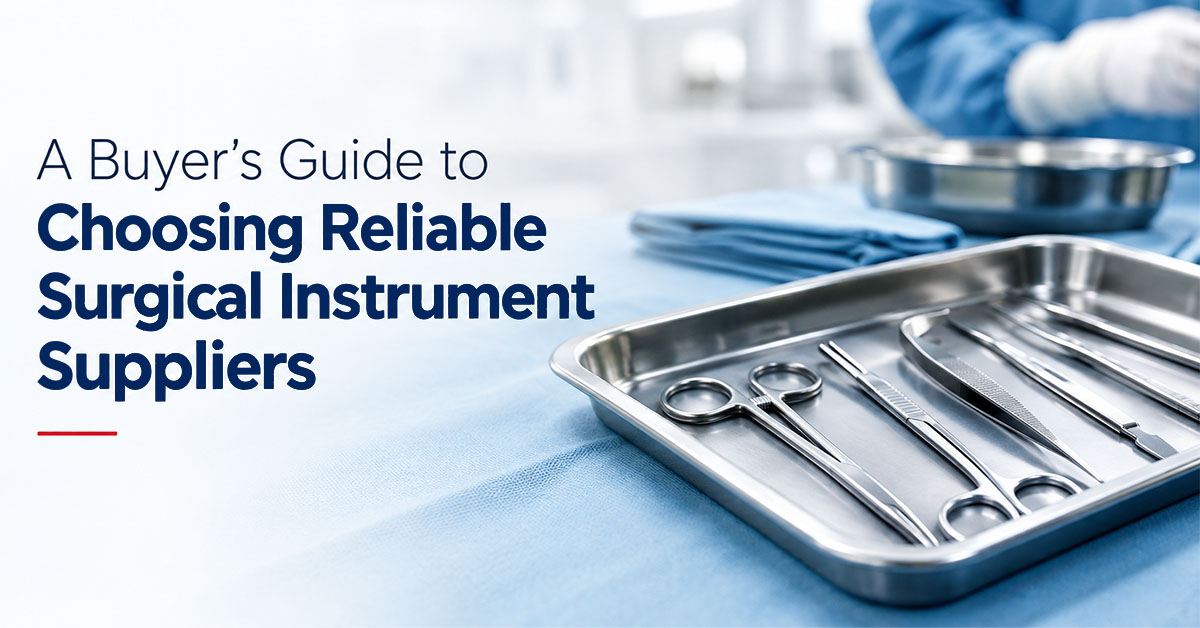
A new clinic orders a full set of forceps and scissors from the lowest bidder. Within three months, the box locks are loose, a few blades have lost their edge and the surgeon has stopped trusting the tray. Replacing it all costs more than buying properly the first time. Instruments sit at the centre of patient safety, so the supplier matters as much as the product.
This guide explains what to check, including credentials, materials, range, sterilisation readiness, pricing and support, so you can choose among surgical instruments suppliers with confidence and avoid costly rework.
Why the Supplier Matters as Much as the Instrument
An instrument can look right in a catalogue and still fail in the theatre. The supplier decides which brands you see, how they are stored and what happens if something goes wrong.
- Poorly sourced instruments can bend, corrode or lose alignment within weeks
- Inconsistent batches make it hard for staff to trust their tools
- Slow replacements disrupt scheduled procedures
- Weak documentation creates problems during audits and inspections
A dependable supplier acts as a long-term partner, not just a seller of items. Think of the supplier as an extension of your quality control team. A good one screens manufacturers, rejects faulty batches before they reach you and keeps records that stand up to an audit. A weak one passes every problem on to your operating theatre, where it is far more expensive to fix.
Check Credentials and Compliance First
Before comparing prices, confirm that the supplier operates within the rules for medical devices.
- Ask for valid trade licences and registrations that apply to medical device sale
- Look for quality certifications held by the manufacturers they source from, such as ISO standards
- Request product-wise documentation and batch details
- Check that labelling includes manufacturer name, size and lot information
A supplier who answers these questions quickly and clearly is usually organised throughout. Hesitation is a sign worth noting. Verification should go beyond collecting certificates. Cross-check licence numbers with the issuing authority and confirm that certificates are current, not expired. A reliable supplier will not mind this and will usually have the paperwork ready in one folder.
Look Closely at Materials and Build Quality
Surgical instruments are mostly made of stainless steel, but grades and finishing vary widely.
- Check that the steel resists corrosion, particularly after repeated sterilisation cycles
- Inspect hinges and box locks for a smooth, firm action with no wobble
- Look at jaw alignment, serrations and tips, which should meet cleanly
- Examine the surface finish, since rough spots can trap residue and harbour bacteria
- Ask about hardening and tempering, which affect edge retention in cutting tools
Requesting a sample or inspecting items in person gives better information than a product photograph. A simple hands-on test helps. Open and close each instrument several times, feel the ratchet engage, and check that the tips meet exactly. Compare weight and balance across pieces of the same type. Instruments that feel uneven in the hand rarely perform evenly during a procedure.
Range, Availability and Consistency
A supplier with a broad catalogue saves time for hospitals that buy across specialties. Equally important is whether they can deliver the same quality again and again.
- Ask which specialties they cover, such as general surgery, orthopaedics, ENT and gynaecology
- Check whether common items are kept in stock or ordered only on demand
- Find out how long custom or special orders usually take
- Compare a repeat purchase with the first one, to see whether quality holds steady
Consistency matters because surgeons become used to the weight and feel of particular instruments, and changes between batches are noticed. Ask how the supplier handles stock shortages. Some offer a comparable alternative, while others simply delay the order. Knowing this in advance matters for clinics running scheduled surgeries, where a missing instrument can force a postponement.
Sterilisation Readiness, Packaging and Traceability
How an instrument arrives affects how soon it can be put to work.
- Items should be packed so that they do not rub or bend in transit
- Instruments should withstand autoclaving without discolouration or pitting
- Care instructions should be supplied for cleaning, lubrication and storage
- Batch or lot numbers should be traceable if a problem has to be reported
Good traceability protects the hospital as well as the patient, because it allows quick action if an issue turns up later.
Handling instructions are easy to overlook but worth requesting in writing. They should cover:
- Recommended cleaning agents and what to avoid
- Lubrication guidance for hinged instruments
- Storage conditions that prevent corrosion
- The expected number of sterilisation cycles
Keeping these instructions on file also helps the sterilisation team follow one consistent routine, which protects the instruments from avoidable wear and makes it easier to spot a faulty piece early.
Pricing, Payment Terms and Hidden Costs
The cheapest quote often leaves out something that appears later on the bill.
- Compare prices on the basis of the same grade, brand and finish
- Ask about discounts for bulk or repeat orders
- Clarify who pays for freight, insurance and handling
- Check payment terms, since flexible credit can ease cash flow for new clinics
- Confirm what warranty applies and how claims are handled
Value comes from how long an instrument stays in service. A slightly higher price for steel that lasts years usually costs less over time than frequent replacement. When comparing quotes, build a simple sheet with the unit price, freight, taxes, warranty and replacement terms side by side. A quote that looks lower on one line often turns out higher once every cost is counted, and the sheet makes this obvious at a glance.
Service, Returns and Support After the Sale
The real test of a supplier begins after delivery. Defective items, wrong sizes or urgent top-ups need quick handling.
- Ask about the return and replacement policy in writing
- Find out how fast they respond to complaints
- See if they offer repair, sharpening or reconditioning services
- Check whether a named contact person handles your account
Speak with other buyers if possible. Their experience with delays and problem-solving will tell you more than any brochure. Sharpening and reconditioning services deserve particular attention. Cutting instruments dull with use, and a supplier who can restore them extends their working life and lowers your replacement spend. Ask how long the turnaround is, so your trays are not left short during busy weeks.
Choosing a Supplier You Can Rely On for Years
R L Hansraj Company supplies surgical instruments and related equipment to hospitals, clinics and dealers in Chennai. Its focus is on stocking dependable items and helping buyers match instruments to the procedures they perform.
The right supplier makes the day-to-day work of a surgical team easier, through steady quality, honest documentation and quick help when something goes wrong. Take your time, ask for samples and compare terms carefully before placing a large order. Start with a small trial order before committing to a large contract. It shows you how the supplier handles packing, delivery times and queries, and it gives your surgical team a chance to judge the instruments in real use. Strong results on a small order make the larger one far safer to place.
If you prefer to work with a local source, you can also explore surgical instruments manufacturers in Chennai and see how closely their range, support and delivery times match what your facility needs.