
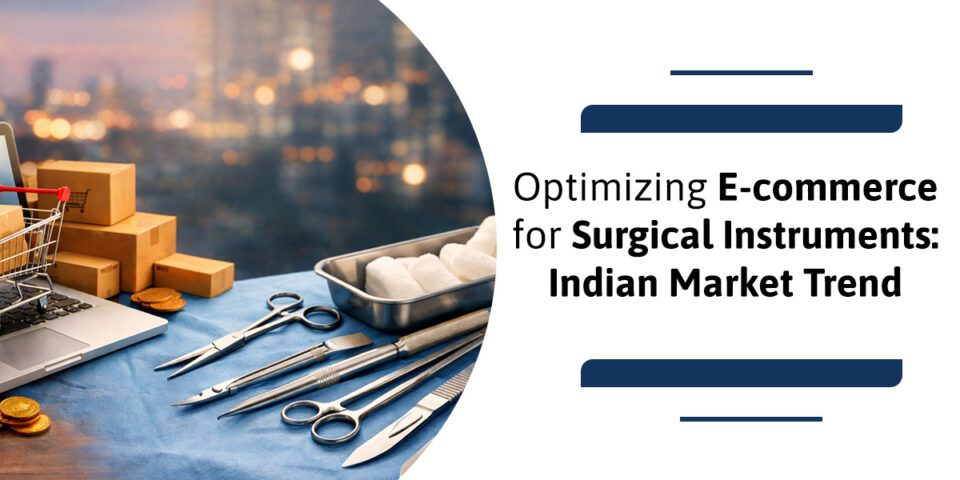
The old way of buying surgical tools in India was a mess of local distributors, unlabelled boxes, and “favors” from middlemen. If you needed a specific set of forceps, you went to a physical street in a city like Chennai and hoped the quality matched the price. But the market is finally growing up. The emergence of a legitimate Medical Equipment Online Shop is killing the middleman economy. We’re moving toward a system where pricing is transparent, and the quality is standardized, whether you’re a senior surgeon or a first-year resident. This isn’t just about the convenience of clicking a button; it’s about making sure a clinic in a remote town can get the same ISO-certified precision as a top-tier hospital. The digital shift is finally putting the focus back on the instrument’s performance rather than the salesman’s pitch.
The Trust Deficit: Overcoming the “Touch and Feel” Barrier
In a field where a millimeter of slip can be catastrophic, “good enough” is a dangerous phrase. Surgeons are notoriously protective of their “tactile tradition” the need to feel the weight, balance, and specific “bite” of a needle holder or forceps before it ever enters an operating room. Historically, this has made the Indian market a tough nut to crack for e-commerce. You can’t test the tension of Surgical Instruments through a flat glass screen, and that hesitation has kept many practitioners tethered to local physical suppliers.
To bypass this, the industry is shifting toward extreme technical transparency. High-fidelity data is the new “touch.” Leading platforms are now using 360-degree high-definition imagery and exhaustive metallurgical specs to replace the physical audition. But data alone isn’t enough; in the Indian market, certification is the real currency. For high-stakes Medical Devices, a visible ISO 9001:2015 or CE badge is often the only thing standing between a “cart abandonment” and a “confirmed order.” When a surgeon can verify the origin and the quality standard of the steel digitally, the digital storefront stops being a risk and starts being a strategic advantage.
Demographic Shifts: Targeting the Digital-Native Resident
The “old guard” of surgery might still prefer a weekend trip to the cluster of Surgical Shops in Chennai’s Park Town, but the needle is moving. A new generation of medical students and junior residents who grew up ordering everything from biryani to smartphones via an app is entering the workforce. They don’t want to spend their limited post-shift hours navigating the humidity of Nyniappa Naicken Street to find a dissection kit. They want a mobile-first experience that mirrors the rest of their digital life.
Optimization in the Indian market is now leaning heavily into this “Student Economy.” Successful platforms aren’t just selling tools; they’re building brand loyalty early. This demographic cares more about the speed of delivery and the ease of a WhatsApp-integrated inquiry than the legacy of a physical storefront. For them, the ideal surgical shop is mobile-first, easy to access between shifts, and aligned with both their training needs today and their clinical practice tomorrow.
Supply Chain Logistics: The “Cold-Chain” of Precision
Moving a delicate ophthalmic blade or a micro-laryngeal set from a warehouse to a rural clinic is a logistical nightmare. Unlike standard consumer goods, Surgical Instruments are high-precision tools that cannot survive a rough transit. If a set of forceps is bent or a scalpel loses its edge due to poor handling, the tool is useless before it even reaches the sterile field. In India’s varied climate and often chaotic courier networks, the “last-mile” integrity of Medical Devices is the ultimate test for any e-commerce platform.
Optimization here means moving beyond basic bubble wrap. We are seeing a shift toward reinforced, tamper-proof, and climate-stable packaging that treats every shipment like a sterile asset. This is especially critical for Tier-2 and Tier-3 cities where specialized distributors simply don’t exist. E-commerce is filling that massive gap, but only if the reverse logistics are just as sharp. If a cardiovascular retractor arrives with even a microscopic flaw, the return and replacement process must be instantaneous. A delay in the supply chain isn’t just a business inconvenience it’s a delayed surgery. Reliable delivery is the backbone of digital trust in the Indian healthcare sector.
Bulk Procurement vs. Individual Orders
The Indian market doesn’t operate on a “one size fits all” model. You have the individual resident buying a single pair of scissors and the procurement officer at a 500-bed hospital looking for hundreds of units. Most standard e-commerce platforms fail because they treat these two buyers the same. In reality, closing a high-value order for Surgical Instruments usually requires a human touch. That is why WhatsApp integration has become the secret weapon for any successful Medical Devices portal.
Indian buyers want to negotiate. They want to “chat” about a quote, ask about bulk discounts, or verify if a specific tray can be customized before they commit a large chunk of their budget. Optimization means having a UI that caters to the institutional buyer who needs a formal quote for a government tender, while also providing a quick, frictionless checkout for the solo practitioner. Whether it is tungsten carbide scissors or bulk dressing drums, the platform must handle tiered pricing as a standard feature. If you make it difficult to scale an order from one to one hundred, you’ve lost the institutional market entirely.
The “After-Sales” Ecosystem
In the Indian medical market, the transaction doesn’t end when the courier drops off the box. Because Surgical Instruments are long-term assets, the “after-sales” support is what actually builds a recurring customer base. Many platforms fail because they treat Medical Devices like disposable consumer goods. In reality, a surgeon needs to know the specific sterilization limits of a new alloy or how to maintain the tension in a specialized retractor over hundreds of cycles.
Optimization is now shifting toward an educational model. We are seeing product pages that include “How-to” maintenance videos and detailed guides on autoclave compatibility. This content turns a simple storefront into a resource hub. Furthermore, the role of peer reviews in the Indian surgical community is massive. A “Verified Purchase” review from a senior consultant at a known hospital carries more weight than any glossy marketing banner. When a platform hosts an active community of feedback, it proves that the instruments aren’t just good on paper, but reliable in the high-pressure environment of an actual operating theater.
Conclusion
Digital transformation isn’t replacing the legacy of the Indian surgical market; it is simply giving it a much longer reach. Whether a doctor is searching for a local Surgical Shop Coimbatore or browsing a massive digital catalog from a ninety-year-old Chennai house, the core demand remains the same: uncompromising precision. The shift toward e-commerce succeeds when it stops trying to be a generic storefront and starts acting like a specialized medical partner that understands the nuances of metallurgy, sterilization, and institutional procurement.
By merging the deep-rooted trust of traditional craftsmanship with the speed of modern logistics, the industry is finally solving the accessibility gap. In India, surgical instruments are moving toward a model where the physical reliability of the tool is matched by digital transparency in sourcing, pricing, and certification. As the next generation of surgeons takes over, the ability to source high-grade Medical Devices with a single click will move from a luxury to a standard operational requirement, ensuring that the best tools are always within reach of the hands that need them most.