
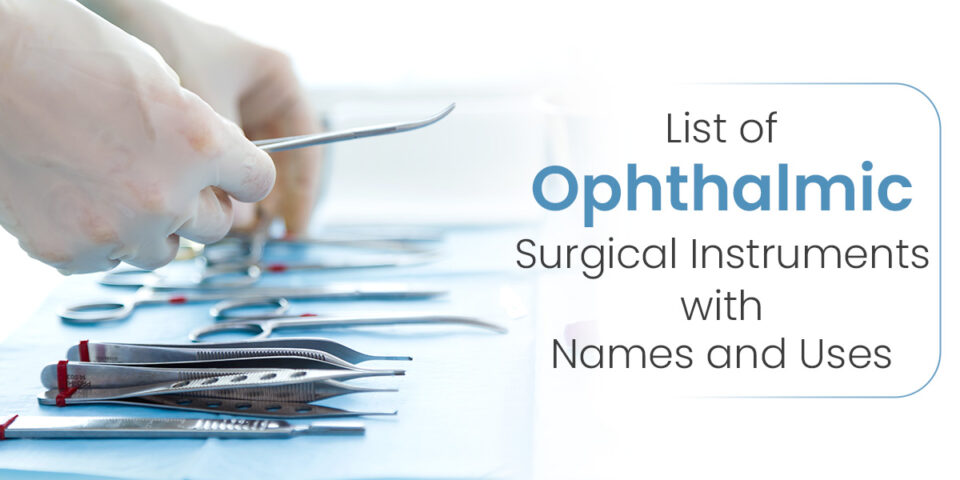
Eye surgery is one of those things that sounds intimidating until you understand what actually goes into it. The precision, the tools, the years of training behind every incision. It is a field where nothing is left to chance, and that includes the instruments used in the operating room.
Every ophthalmic procedure, whether it is a routine cataract removal or a more complex glaucoma surgery, depends on tools that are purpose-built for that specific job. A general surgical instrument simply will not do here. The eye is too small, too delicate, and too important.
That is why experienced surgeons and hospitals are selective about where their equipment comes from. Trusted Surgical Instruments Suppliers are not just a line item on a procurement list. They are part of the reason surgeries go well.
In this blog, we will take a closer look at the most important ophthalmic surgical instruments across five key procedure types, what they are called, and exactly what role they play in the operating room.
Cataract Set Instruments
Cataract surgery is one of the most performed procedures in ophthalmology globally. The goal is straightforward: remove the clouded natural lens and replace it with a clear artificial one. But the execution requires a very specific set of instruments, each doing a job that nothing else can quite replicate.
- Capsulorhexis Forceps (Utrata): The Utrata forceps is used to make a small, circular opening in the front of the lens capsule. Get this step right and the rest of the surgery has a solid foundation to build on. That opening is the starting point for everything that follows in the surgery. It sounds like a small step, but the quality of that opening determines how well the artificial lens sits inside the eye. The Utrata forceps gives surgeons the control to make it clean and precise every time.
- Vannas Scissors – Delicate, sharp, and designed for minimal resistance. These scissors handle fine tissue cutting during the procedure without pulling or dragging, which matters enormously at this scale.
- Simcoe Cannula – Once the lens is broken up, the remaining material needs to be cleared out. The Simcoe cannula irrigates and aspirates simultaneously, keeping the anterior chamber stable while removing cortical remnants.
- Lieberman Phaco Speculum – Keeps the eyelids open and out of the way throughout the procedure. Both hands stay free, and the eye stays open. That is the whole point of this instrument.
- Shepard Lens Holding Forceps – The intraocular lens going into the eye is small and needs to be handled carefully. These forceps hold the lens firmly and guide it into place. Careful handling at this stage is what keeps the lens intact going in. Explore our full range of cataract surgical instruments designed for precision-driven ophthalmic procedures here: Cataract Instruments
Glaucoma Set Instruments
Glaucoma surgery is all about managing pressure. When fluid cannot drain from the eye properly, pressure builds and slowly damages the optic nerve. Left untreated, it leads to vision loss. The instruments used in these procedures have to work with precision around some very fine anatomy.
- Westcott Tenotomy Scissors – These scissors are used to open the conjunctiva at the start of many glaucoma procedures. They cut cleanly and their slight curve makes navigating around the eye surface a lot easier than it sounds.
- Colibri Forceps – A 1×2 tooth configuration that grips tissue and holds it without slipping. In microsurgery, that reliability is not optional. It is the baseline expectation.
- Jaffe Tying Forceps – Ophthalmic sutures are often finer than a human hair. Jaffe forceps are made specifically for handling those threads, placing them accurately, and keeping everything where the surgeon needs it.
- Barraquer Wire Speculum – Keeps the eye open during surgery. The wire construction keeps it lightweight, which reduces pressure on the eyelids and minimises any distortion of the eye during the procedure.
- Harms Trabeculotomy Probe – A specialist instrument used specifically during trabeculotomy, where a channel is opened in the eye’s drainage angle to improve fluid outflow. It is designed for that one job and does it well. View high-quality glaucoma surgical sets trusted by hospitals and ophthalmic surgeons here: Glaucoma Instruments
Squint Set Instruments
Squint surgery, or strabismus correction, works on the muscles around the eye rather than the eye itself. The idea is to reposition the extraocular muscles so that both eyes point in the same direction. It is precise, it involves accurate measurement, and it requires instruments that can handle muscle tissue gently.
- Jameson Muscle Hook – Working on the muscles around the eye means getting to them without disturbing everything else nearby. The Jameson hook slides under the muscle gently, holds it where it needs to be, and lets the surgeon do their job without the tissue fighting back.
- Steven Tenotomy Scissors – Lightweight scissors built for cutting conjunctiva and muscle during strabismus procedures. Easy to manoeuvre in a tight space and consistent in how they cut.
- Fixation Forceps – Keeps the eye steady throughout the operation. In squint surgery, a stable eye is not just helpful, it is essential for accurate muscle adjustment.
- Barraquer Needle Holder – Fine sutures require a needle holder that maintains consistent grip pressure. The spring mechanism keeps the grip consistent, which is exactly what you need when the sutures are this fine.
- Castroviejo Caliper – Measures the precise distances needed for muscle recession and resection. Even a millimetre off can affect the final result, so accuracy here is everything. Explore squint surgery instruments designed for accurate muscle correction procedures here: Squint Instruments
Enucleation Set Instruments
Enucleation is the surgical removal of the eyeball, carried out when an eye is beyond saving due to tumour, trauma, or severe pain with no remaining vision. It is a procedure that calls for careful, methodical technique and instruments that perform reliably under those conditions.
- Clark Eye Speculum – Holds the eyelids open throughout, giving the surgeon full access to the orbit from the start of the procedure.
- Fixation Forceps – Stabilises the globe during the early dissection phase, keeping the eye from rotating while the surgeon works.
- Westcott Tenotomy Scissors – Used here to cut the conjunctiva and detach the extraocular muscles cleanly before the eye is removed.
- Enucleation Spoon – The instrument used to actually deliver the eyeball from the orbit. The spoon’s curve does most of the work here. It sits around the globe and eases it out carefully, without putting pressure on the tissue that surrounds it. Discover high-quality enucleation surgical sets crafted for durability and surgical accuracy: Enucleation Set Instruments
DCR Set Instruments
Dacryocystorhinostomy, or DCR, is a procedure performed when the tear drainage duct is blocked. A new opening is created between the tear sac and the nasal cavity so tears can drain normally again. It sits at the intersection of ophthalmology and ENT, and the instruments used reflect that.
- Catspaw Retractor – Gently moves soft tissue aside during the procedure to keep the surgical site clear. Near the nasal bone, careful retraction is what keeps the field visible and workable.
- Fixation Forceps – Holds tissue in place during the cutting and suturing phases near the lacrimal sac, where stability directly affects precision.
- Freer Elevator – Separates soft tissue from bone around the lacrimal fossa. The smooth, wide blade lifts periosteum without tearing it, which keeps the dissection clean and controlled. View the complete range of DCR surgical instruments developed for precision lacrimal surgeries: DCR Set Instruments
Understanding the instruments behind ophthalmic surgery gives you a much clearer picture of just how specialised this field really is. Every tool on this list exists because a general alternative was not good enough. That specificity is what makes eye surgery as safe and effective as it is today.
At R.L. Hansraj and Company, we build these instruments with that standard in mind. As trusted Surgical Equipment Manufacturers in Chennai, we have been supplying ophthalmic surgical sets to clinics, hospitals and surgical centres for years. Every instrument we manufacture goes through a process focused on performance, durability, and the kind of finish that holds up in real surgical conditions.
If you are sourcing instruments for your practice or looking to upgrade your existing sets, we are happy to help you find exactly what you need.