
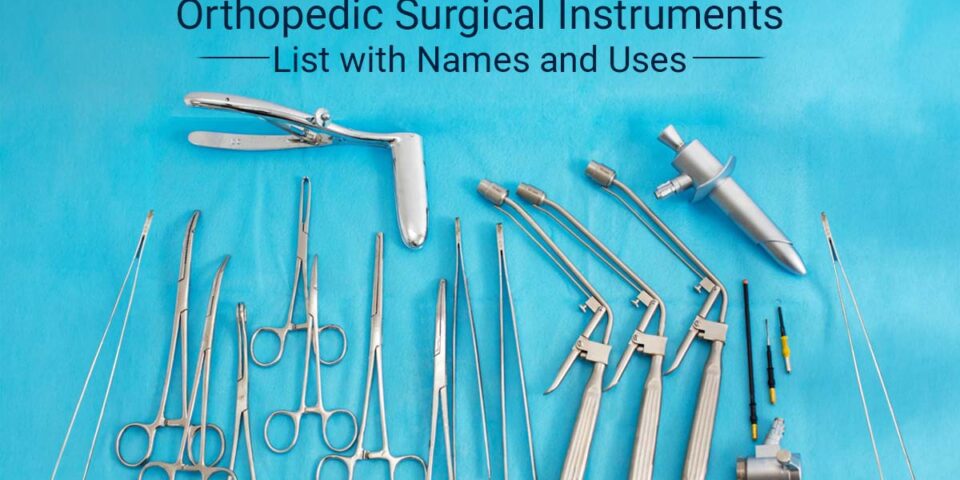
Walk into any orthopedic operating room and the instrument tray tells its own story before the surgeon even picks up the first tool. Bone-holding forceps lined up next to reamers, drills sitting close to fixation plates, each piece waiting for a very specific moment in the procedure. For anyone sourcing equipment for a hospital, clinic, or training institution, knowing what each of these tools actually does matters just as much as knowing where to buy them. This guide breaks down the core orthopedic surgical instruments used across common procedures, what they’re built for, and why getting the specifications right actually matters.
Orthopedic surgery covers a wide range of procedures, fracture fixation, joint replacement, spine work, arthroscopy, and each category leans on a distinct set of tools. Below is a practical breakdown of the instruments that show up most often across these procedures.
Bone-Cutting and Shaping Instruments
These are the tools that physically shape or section bone, and precision here directly affects healing outcomes.
- Bone saws cut through bone during amputations, joint replacements, and grafting procedures. Most operating rooms lean on oscillating saws specifically, since the controlled back-and-forth motion gives a cleaner cut than a straight blade would.
- Osteotomes work a lot like chisels, and surgeons reach for them whenever bone needs to be cut or reshaped, most often during realignment or grafting work.
- Bone rasps and files come in right after cutting, smoothing rough edges so the site doesn’t irritate surrounding tissue once healing starts.
- Reamers shape the bone canal in joint replacement surgery, and getting that shaping right is what allows the implant to sit precisely where it needs to.
Bone-Holding and Reduction Instruments
Fracture management depends heavily on tools that hold bone fragments steady while alignment and fixation happen.
- Bone reduction forceps grip fractured fragments and hold them in position during realignment, giving the surgeon a stable field to work in rather than shifting bone.
- Bone holding clamps do the same thing just on a bigger scale. These are used on larger bones such as the femur to keep everything in alignment while plating or nailing.
- Periosteal elevators separate the periosteum, the connective tissue layer, from the bone surface, and doing this carefully avoids unnecessary trauma to surrounding structures.
Drilling and Fixation Instruments
Once fragments are aligned, these tools handle the actual fixation work, screws, wires, and pins that hold everything in place during healing.
- Bone drills create the precise holes screws or pins need, and there’s barely a fixation procedure that doesn’t rely on them at some stage.
- Wire drivers insert Kirschner wires, better known as K-wires, which stabilize smaller bone fragments. They come up often in hand and foot surgeries where the bones involved are simply too small for larger hardware.
- Screwdrivers and screw sets handle the actual screw insertion into bone or implants, and they’re available across a range of sizes depending on which fixation system is being used.
- External fixators stabilize fractures from outside the body entirely. Trauma cases that aren’t ready for internal fixation often rely on these as a first step.
Joint Replacement Instruments
Hip and knee replacement procedures require a highly specialized set of tools, often supplied as complete instrument sets matched to a specific implant system.
- Acetabular reamers shape the hip socket so the replacement implant fits with precision, not just roughly.
- Femoral rasps prepare the femoral canal to receive the stem component of a hip implant.
- Tibial and femoral cutting guides keep bone cuts accurate and consistent during knee replacement, and that consistency has a direct bearing on how well the implant aligns and how long it lasts.
- Trial implants are temporary stand-ins, used to test fit and joint mechanics before the surgeon commits to placing the final implant.
Soft Tissue and General Support Instruments
Orthopedic procedures still rely on general surgical tools throughout, even when the primary focus is bone or joint work.
- Retractors hold soft tissue and muscle aside, keeping the surgical site visible and accessible for as long as the procedure runs.
- Bone curettes scoop out damaged or diseased bone tissue, commonly showing up in tumor removal or cyst treatment.
- Hemostatic forceps control bleeding by clamping blood vessels, a basic requirement across virtually every surgical category, not just orthopedics.
- Orthopedic mallets supply the controlled force needed to insert implants, chisels, or osteotomes, without risking damage to whatever’s nearby.
Why Instrument Quality Actually Matters in Orthopedic Surgery
A slightly dull osteotome or a reamer that doesn’t hold calibration doesn’t just slow down a procedure, it can compromise the entire surgical outcome. Bone doesn’t forgive imprecision the way soft tissue sometimes does, once a cut or a hole is made incorrectly, there’s often no clean way to correct it mid-procedure.
A few things worth checking before sourcing orthopedic instruments for a facility:
- ISO certification and compliance with international quality standards
- Material grade, most quality instruments use surgical-grade stainless steel for durability and repeated sterilization
- Compatibility with specific implant systems, particularly for joint replacement instrument sets
- Consistent supply reliability, since incomplete instrument trays can delay scheduled procedures
Hospitals, clinics, and medical colleges sourcing in bulk also need to think beyond individual tools, complete, standardized sets reduce the risk of mismatched or missing instruments mid-surgery, which matters far more in orthopedic procedures than in most other specialties.
Sourcing the Right Instruments for Your Facility
Whether you’re setting up a new operating theatre or replenishing existing trays, working with an established supplier matters more than it might seem at first glance. Instrument quality directly affects surgical precision, sterilization durability, and how long a tool holds its edge across repeated use.
R.L. Hansraj & Co. has been manufacturing and supplying surgical instruments since 1927, with an ISO-certified range that covers orthopedic, general, and specialty categories alike. That kind of long-standing experience tends to show up in the small details, consistent calibration, dependable finishing, and instrument sets that actually match what a busy operating room needs.
For hospitals, clinics, and training institutions looking to source reliably, exploring a trusted online surgical store is often the most efficient way to compare full instrument ranges, verify certifications, and place bulk orders without the delays that come with sourcing tool by tool from multiple vendors.