
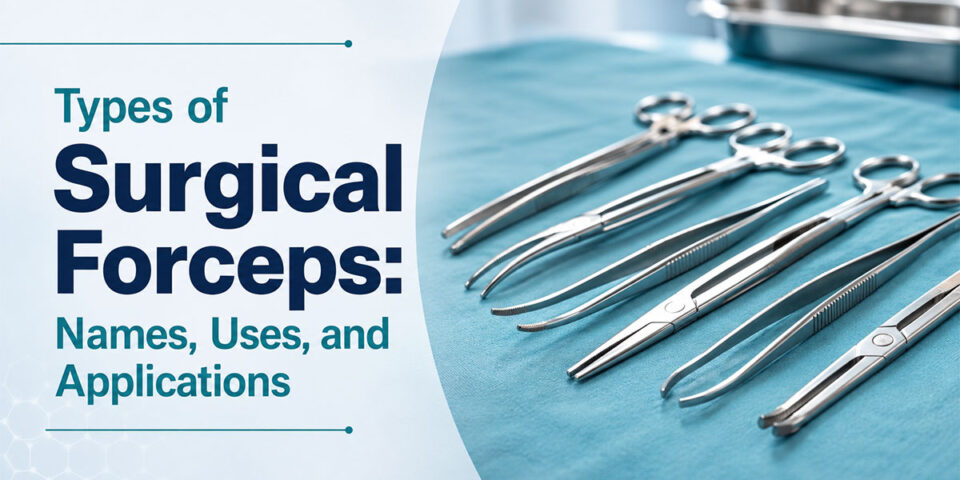
Surgical forceps are some of the most important medical devices used today in hospitals. With the help of surgical forceps, the surgeon is able to hold, clamp, manipulate and handle tissue in the process of different operations. Choosing good quality medical tools for surgery is very important for both patients’ safety and surgical success. No matter if you perform general surgery, gynecological operation, ENT operation or ophthalmology treatment – using the proper type of forceps becomes extremely important.
Modern technologies have provided many types of forceps, designed to perform different functions. Understanding how to use forceps and what kind of forceps are there will be helpful in choosing the appropriate one for your operation.
Definition of Surgical Forceps
Surgical forceps are specialized hand-held medical devices which serve to grasp, clamp, press, and handle various tissues, dressings, blood vessels, and surgical materials. They have functionality similar to tweezers or clamps; however, they are developed for more precise handling.
Almost all surgical forceps are made of premium quality stainless steel material.
Surgical Forceps Commonly Used in Surgeries
1. Artery Forceps
Artery forceps or hemostatic forceps are one of the most widely used medical devices in surgical procedures. The main function of these forceps is to clamp off blood vessels while conducting any surgery.
Common Uses:
- Controlling the flow of blood
- Clamping of arteries and veins
- Temporary holding of tissues
- Helping in closing the wound
The artery forceps come in straight as well as curved shapes.
2. Dissecting Forceps
Dissecting forceps are used to hold delicate tissues during dissection surgeries. The dissecting forceps are either smooth or toothed.
Smooth Dissecting Forceps
They are known for their blunt tips and are used to move delicate tissue without injuring them.
Uses:
- Plastic surgeries
- General surgeries
- Dressings
- Moving soft tissues
Toothed Dissecting Forceps
These are forceps with teeth that allow them to hold hard tissues easily.
Uses:
- Closure of wounds
- Handling fascia
- Orthopedic procedures
- Tissue dissection
3. Allis Tissue Forceps
The Allis tissue forceps are those with interlocking teeth that allow them to hold tissues effectively during surgery. .
Uses:
- Handling hard tissues
- Handling fascia
- Soft tissue surgeries
- Surgical procedures
They are mainly used in tissues that are meant to be excised since they give a good hold.
4. Dressing Forceps
Dressing forceps are usually employed for manipulating dressings, gauze, swabs, and sterile items.
Uses:
- Wound dressing
- Removal of foreign bodies
- Sterile manipulation
- Minor surgical operations
The smooth ends of these forceps ensure low risk of contamination without compromising sterility.
5. Thumb Forceps
Thumb forceps look like tweezers and work due to pressure applied by fingers and not handles.
Uses:
- Manipulation of fragile tissues
- Suturing aid
- Micro-surgical procedures
- Plastic surgery procedures
These instruments provide excellent precision during intricate procedures.
6. Forceps for Sponge Retention
These forceps are supposed to hold on to the surgical sponges during the process of performing an operation.
Uses:
- Surgical site cleaning
- Skin preparation for surgery
- Holding gauze
- Operating room techniques
Ring-like jaws prevent tearing of the surgical sponge unintentionally.
7. Green Armytage Forceps
Green Armytage forceps find their applications in obstetric and gynecology procedures. The jaws of Green Armytage forceps are wide and triangle-shaped.
Uses:
- Cesarean delivery
- Surgical procedures on uterus
- Gynecological surgical procedures
- Control of uterine bleeding
8. Uterine Ovum Forceps
This instrument is specifically designed for the removal of tissue or any other material from the uterus.
Uses:
- Gynecological operations
- Obstetrical surgeries
- Tissue excision
- Examinations of uterus
Long handles provide safety as well as surgical precision.
9. Forceps for Micro Laryngoscopy
They are meant to be used in surgeries dealing with the larynx and vocal chords.
Uses:
- Laryngoscopic operations
- Surgeries on vocal chords
- Tissue biopsy
- Growth removal
Very good vision and control in microscopic operations can be guaranteed by use of these tools.
10. Ophthalmic Forceps
Ophthalmic surgeries require highly precise tools. Ophthalmic forceps have been made especially for eye surgery.
Uses:
- Cataract surgeries
- Surgeries on cornea
- Retinal surgeries
- Microsurgical eye surgeries
The lightweight feature makes them suitable for highly accurate work.
Selecting the Correct Surgical Forceps
There are several things that you need to consider while choosing your surgical forceps.
Quality of Material
Use high-quality stainless steel so that your surgical forceps are durable, rust-free, and reusable after sterilization.
Tip Shape
A variety of tip shapes exist according to the procedure for which they are required.
Forceps Locking Mechanism
There are forceps that feature ratchet locking mechanism for constant hold, whereas others use manual lock for more flexibility.
Ergonomics
Hand comfort minimizes the risk of strain during long operations and enhances accuracy of surgery.
Requirements
General surgery, ENT, ophthalmology, gynecology, orthopedics, and cardio-surgery demand specific types of forceps.
Advantages of Good Quality Surgical Forceps
High quality surgical tools provide many benefits including:
- Increased surgical accuracy
- Effective handling of tissues
- Minimal tissue damage
- Increased patient safety
- Extended longevity of the tool
- Consistent sterilization results
- Comfort for the surgeon during surgery
Good quality instruments play a major role in ensuring surgical success.
Reliable Supplier of Surgical Instruments
There is a need for reliable suppliers who provide an extensive range of precision surgical instruments. Suppliers with many years of experience in the industry will supply items that can be used in hospitals, medical schools, clinics, and specialized surgery units. Such wide-ranging portfolios include general surgery, ENT, ophthalmic, gynecological, orthopedic, neurological, and cardiovascular specialties. This makes it possible for medical practitioners to obtain their surgical instruments from one reliable supplier.
Conclusion
The surgical forceps are very essential instruments that are used in almost all medical disciplines. There are forceps that are used for various purposes ranging from arterial forceps, dissecting forceps, ophthalmic forceps, gynecological forceps to ENT forceps. The knowledge of the types of forceps is very important because it allows one to pick the appropriate instrument for a specific operation. It is very important for hospitals and medical practitioners to buy reliable and durable surgical forceps from reputable manufacturers and Surgical Equipment Dealers in Chennai.