
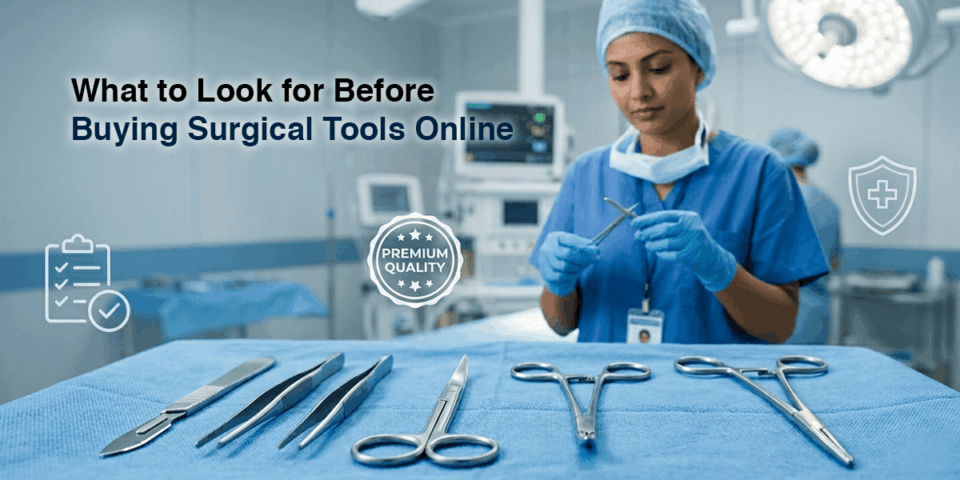
The procurement process for medical facilities has shifted significantly toward digital channels over the last decade. While the convenience of sourcing surgical instruments online has streamlined inventory management for many clinics, it has also introduced a layer of risk that didn’t exist when deals were done through local, face-to-face distributors. You are no longer just looking at a catalog; you are navigating a global marketplace where the quality of steel and the legitimacy of certifications can vary wildly from one listing to the next. A mistake in this department is not like ordering the wrong office stationery. If a tool fails during a procedure because of poor tempering or a hidden burr, the legal and clinical consequences are immediate.
Buying medical gear through a screen requires a different kind of skepticism. You have to look past the high-resolution photos and marketing copy to find the technical data that actually determines the lifespan of the tool.
Material Integrity and the Grade of Steel
The most critical factor in any surgical tool is the quality of the stainless steel used in its construction. Most buyers assume that “stainless” is a binary state, but in reality, the grade of the metal dictates how the tool will react to the harsh chemicals and high heat of the autoclave. Surgical tools must be made from high-quality martensitic or austenitic steel, typically in the 400 series. If a vendor cannot specify exactly which grade of steel they are using, you should walk away.
Low-quality steel will develop “pitting” after a few sterilization cycles. These tiny holes are a breeding ground for bacteria and make the instrument impossible to fully sanitize. You might save 20% on the initial purchase price, but you will end up replacing the tool in six months when the corrosion becomes visible to the naked eye. High-grade steel maintains its edge and its structural integrity even after hundreds of hours in a pressurized steam environment.
Regulatory Certifications and Fake Paperwork
Regulatory compliance is the only thing standing between a legitimate medical device and a dangerous counterfeit. When sourcing medical equipment, you must verify that the manufacturer holds valid ISO 13485 certification. This isn’t just a trophy for the wall; it is a rigorous standard for quality management systems specific to medical devices.
Many online marketplaces are flooded with vendors claiming FDA or CE approval, but these certificates are frequently doctored. You should ask for the 510(k) summary or the specific registration number and verify it directly on the government database. If a supplier is hesitant to provide this documentation, they are likely a middleman with no oversight of the actual production process. Authentic medical equipment should always come with a traceable trail that leads back to the factory floor.
The Problem with Middlemen and White-Labeling
The internet has made it very easy for trading companies to pose as manufacturers. These companies buy bulk shipments of generic tools from various factories, slap their own branding on them, and sell them as premium products. The issue here is consistency. One batch might be excellent, while the next is made from inferior scrap metal.
- Ask for the Factory Location: A genuine manufacturer will be transparent about where their forge is located.
- Request a Sample: Before placing a bulk order for a new clinic, request a single unit to test the weight, balance, and joint tension.
- Check the Joint Construction: Look closely at the box joints on the forceps and scissors. If the joint is loose or grinds when it moves, the tool was not properly aligned during assembly.
When you buy Medical Supplies from a direct manufacturer, you are buying accountability. If a batch of hemostats has a recurring defect, a manufacturer can trace it back to a specific machine or operator. A trading company will simply offer you a refund and sell the same defective stock to the next buyer.
Understanding the Sterilization Cycle
One aspect of procurement that is often overlooked is how the tool handles the long-term stress of the clinical environment. Clinical equipment is subjected to extreme thermal expansion and contraction. Tools that are joined with inferior welds or adhesives will eventually crack at the stress points. You want to see seamless construction wherever possible.
Instruments that feature tungsten carbide inserts, often identified by gold-plated handles, are generally worth the higher investment. These inserts are much harder than standard stainless steel, meaning needle holders will maintain their grip and scissors will stay sharp for significantly longer. If your facility has a high volume of cases, the “cheap” option is actually the most expensive one when you factor in the frequency of sharpening and replacement.
Ergonomics and the User Experience
A tool that looks perfect in a photo might be a nightmare to use in a long procedure. The ergonomics of surgical tools are about more than just comfort; they are about reducing surgeon fatigue and ensuring precision.
You should look for:
- Balance: The tool should feel neutral in the hand, not tip-heavy or handle-heavy.
- Satin Finishes: Highly polished, reflective tools can cause glare under intense operating room lights, which is why many modern surgeons prefer a matte or satin finish.
- Spring Tension: On self-retracting instruments, the tension should be firm but not so stiff that it requires excessive force to operate.
These details are rarely found in the product description. This is why reading peer reviews from other medical professionals is essential. If multiple buyers mention that a particular brand of retractors has “sharp edges” on the handles, it is a clear sign that the final finishing stage of production was rushed.
Shipping Logistics and Sterile Integrity
Shipping medical supplies requires more than just a sturdy box. If you are ordering delicate instruments like micro-scissors or ophthalmic tools, the packaging must prevent any movement during transit. A single drop by a courier can misalign a delicate tip, rendering a tool useless before it ever reaches the hospital.
Furthermore, you need to consider the customs process if you are ordering from an international vendor. Medical gear is often held for inspection, and if the paperwork is missing a single harmonized system code or a required declaration, your shipment could sit in a humid warehouse for weeks. This exposure to uncontrolled environments can lead to oxidation even before the tools are unpacked. It is often safer to work with an online surgical store that has established local logistics to handle these regulatory hurdles on your behalf.
Documentation and Traceability
Every piece of clinical equipment should arrive with a batch number or a serial number etched into the metal. This is for more than just inventory tracking. If a specific tool is later found to be part of a recalled batch due to a metal impurity, you need to be able to identify exactly which units in your hospital are affected.
Traceability is the hallmark of a professional supplier. If the tools arrive in generic plastic bags with no labeling or tracking information, you have no way to prove their origin or age. This is a massive liability during a clinical audit. Professional suppliers will provide a certificate of conformity with every shipment, explicitly stating that the tools meet the required technical standards for surgical use.
Choosing Longevity Over Price
The pressure to cut costs in the healthcare sector is relentless, but the surgical suite is not the place to pinch pennies. The market for second-rate gear is huge because most buyers only look at the initial invoice. They don’t look at the cost of the surgical delay when a needle holder slips or the cost of the infection when a pitted surface hides a pathogen.
Investing in high-quality gear means you are buying peace of mind. You are ensuring that the surgeons have the tools they need to perform at their best and that the patients are protected from unnecessary risks. When you find a reliable online surgical store, stick with them. Building a long-term relationship with a supplier who understands your facility’s specific needs and quality standards is far more valuable than chasing a 5% discount from a random vendor every month. The goal is a predictable, high-quality supply chain where the gear is the last thing you have to worry about.